

Wyoming-My Home
My family of Wyoming farmers and ranchers shared the importance of soils and plants for nourishing life. My early years were spent listening and learning from their conversations and observing the wildlife and landscapes around me. This also helped me, as a hunter, to see the importance of habitat. Becoming a wildlife biologist seemed only natural. My degrees and 32 years working for Game and Fish gave me the opportunity to explore and research the special public lands that we share and love. We are still learning through research what is best to sustain the wild and free.
Join me and we can seek answers together.
Dan Stroud


WELCOME
to
Wild Wyoming
Immerse yourself in the beauty of the Yellowstone Ecosystem. Discover the values that drive us to protect our environment. Learn about key environmental issues and how you can make a difference. Join us in preserving nature for future generations.


Click on the links below to find information
Discover
Wild Wyoming
We want your input: Issues and Perspectives
Content for Conversations
-
Current information on conservation and wildlife landscapes
-
Policy and political changes that impact wildlife habitat and well-being
-
Data and research on species populations
-
Innovative and evidence-based strategies for improved sustainability
-
Climate impacts and threats
-
Collaboration and consensus building
-

Yellowstone Ecosystem
A Complex System of Private and Public Lands
1. Ecological Integrity and Biodiversity
The Yellowstone ecosystem—often referred to as the Greater Yellowstone Ecosystem (GYE)—is one of the largest, nearly intact temperate-zone ecosystems on Earth. It spans parts of Wyoming, Montana, and Idaho, covering over 22 million acres. Yellowstone National Park forms the core of this ecosystem, which is home to hundreds of species.
2. Geological and Hydrological Features
Yellowstone is renowned for its geothermal features, including geysers, hot springs, and the Yellowstone Caldera and provide unique habitats for specialized organisms and contribute to scientific research on geothermal energy and climate change. The park's rivers and lakes support aquatic life and help maintain water quality for surrounding communities.
3. Carbon Sequestration and Climate Regulation
The forests and grasslands of Yellowstone act as significant carbon sinks, absorbing approximately 1.5 million metric tons of CO₂ annually. This helps mitigate greenhouse gas emissions and combat climate change. Grasslands, with their deep root systems, store carbon in the soil for decades, while forests absorb CO₂ through photosynthesis.
4. Conservation and Restoration
Yellowstone plays a vital role in ecosystem restoration by allowing natural processes such as fires and predator-prey dynamics to occur. This helps maintain healthy soil, supports plant growth, and sustains habitats. The park’s management practices serve as a model for conservation efforts worldwide, demonstrating the importance of protecting large, interconnected landscapes.
5. Scientific and Educational Value
As a “natural laboratory,” Yellowstone is at the forefront of research in landscape ecology, geology, and wildlife management. Its intact ecosystems allow scientists to study ecological processes, species interactions, and the impacts of climate change in a relatively undisturbed setting. The park also inspires environmental stewardship and educates the public about the importance of conservation.
National Park Service (NPS.GOV}
The Yellowstone ecosystem is no exception in the worldwide degradation of natural spaces.
Migration Corridors
Essential for maintaining the ecological integrity
of the Yellowstone ecosystem.
They allow wildlife—such as elk, pronghorn, mule deer, bison, and predators like wolves and grizzly bears—to move freely between seasonal habitats. This movement is crucial for:
-
Accessing food and water: Animals migrate to find optimal foraging grounds and water sources, especially as seasons change.
-
Breeding and genetic diversity: Corridors enable animals to reach breeding grounds, promoting genetic exchange and healthy populations.
-
Survival and adaptation: Migration helps wildlife avoid harsh weather and predation, and adapt to environmental changes, including those driven by climate change.
-
Cultural and Economic Value: Migration corridors have sustained Indigenous peoples for thousands of years and continue to support local economies through wildlife tourism and recreation. Protecting these pathways preserves both natural heritage and livelihoods.
-
See Below for UW Migration Initiative
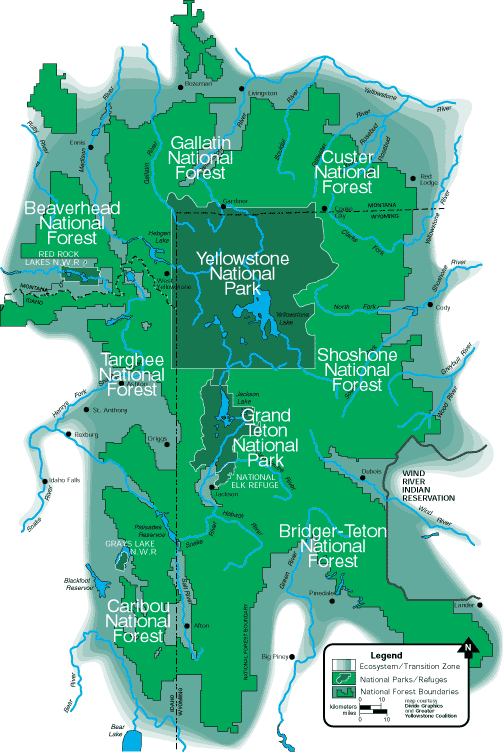
Greater Yellowstone Ecosystem
GYE Migration Corridors
Migration corridors that intersect in the Greater Yellowstone Ecosystem extend far beyond the mountains, to the desert basins including the Wind River Indian Reservation. Map by University of Oregon InfoGraphics


Wildlife
Key Species In the Yellowstone Ecosystem
The grizzly bears, wolves, and herds of elk, bison, and pronghorn that call this region home are all sustained by access to high-quality habitat and the ability to move freely across and within the landscape in order to meet their needs.
Whether animals are migratory, such as elk and bison, or simply need to move unencumbered throughout their range to meet their daily needs, connected landscapes are what keep Yellowstone’s wild inhabitants healthy and thriving.


_edited.jpg)


Threats to Habitat and Wildlife Sustainability
Habitat Loss and Fragmentation
Invasive grasses, wildfires, and energy development have transformed over a million acres of sagebrush annually across the West, including parts of the Golden Triangle. This loss fragments the habitat, making it harder for wildlife to survive and migrate.
Resource Extraction and Development
Recent changes to federal management plans may allow more energy development in critical sage-grouse habitat, reducing protections and turning management over to the states. This could increase the risk of habitat degradation.
Climate and Environmental Pressures
Severe winters, drought, and climate change add further stress, especially for migratory species like pronghorn and mule deer.
Human Infrastructure
Barbed wire fences, highways, and subdivisions disrupt migration routes and can lead to increased mortality for wildlife.
Disease
Wyoming’s wildlife faces several significant diseases, each affecting different species and influencing population health, behavior, and long‑term survival. me. Brucellosis, Chronic Wasting Disease, Pneumonia, Avian Influenza.



Wyoming
Landscapes and Diversity

By the Numbers
800 Species depend on a healthy, balanced habitat in Wyoming.
Humans make it 801.
Yellowstone Species
-
67 species of mammals
-
300 species of birds
-
16 species of fish
-
6 species of amphibians
-
5 species of reptiles
Diversity
Protect
Preserve the Beauty of Nature
Immerse yourself in the wonders of Wild Wyoming's 6 diverse landscapes. From majestic mountains to serene forests, our services offer unique experiences that connect you with nature.

Protecting existing land and wildlife corridors is essential for preserving biodiversity and ensuring a healthy ecosystem for future generations. These pathways allow wildlife to migrate, find food, and reproduce, contributing to the balance of our environment. By safeguarding areas, we not only protect countless species but also preserve natural beauty and resources that future generations will rely on. It is our responsibility to ACT NOW, ensuring a sustainable world for those who come after us.
Educate

Supporting ecosystem improvements starts with public awareness. Students of all ages learn environmental stewardship through hands-on local projects in their community. Ranchers choose to adopt diverse land management techniques to maintain healthy range and successful livestock operations. Homeowners learn to create gardens to boost insect and bird numbers. Public meetings update communities on local and state issues, while mental health researchers promote well-being through nature.
News media including social media and websites are key to informing the public about their roles in the system.
Restore
Sustain
Join us in restoring ecosystems and sustaining biodiversity. Our initiatives focus on reforestation, wildlife rehabilitation, and promoting sustainable practices to ensure a thriving environment for generations to come.

The Yellowstone Ecosystem is no exception in the worldwide degradation of natural spaces. The spread of new two-tracks and recreation trails has fragmented former grasslands and sage habitats, displacing small animals, birds, and insects. Habitat disruption also impacts larger wildlife by removing migration corridors and vegetation. Additionally, increased resource extraction and construction have shifted public lands toward restricted and fenced areas, reducing available natural spaces for public enjoyment.
Conserve

Conservation in the
Greater Yellowstone Ecosystem (GYE) is vital because it protects one of the last nearly intact temperate-zone ecosystems on Earth. This 22-million-acre landscape serves as a critical refuge for biodiversity and a global model for ecological resilience. This essential habitat also supports iconic species in an environment that provides a landscape for protection, freedom of wildlife migration and human observation and interaction. Researchers continue to better understand and share how to sustain this natural balance.
Diversity Data and Maps
Wyoming Natural Diversity Database

Golden Triangle
Challenges for Public Lands
It’s a sagebrush sea, rich with all of the indigenous species known to occupy sagebrush systems.


The Golden Triangle is an informal but ecologically significant region in southwestern Wyoming, stretching from Highway 28 and Farson north to the Big Sandy River, and east of US 191 in the Green River Valley south of Pinedale. This area is part of the vast sagebrush sea and is considered one of the most intact sagebrush ecosystems in the world.
Importance to Wildlife
1. Sage-Grouse Stronghold
-
The Golden Triangle contains the largest population of sage-grouse in Wyoming and, by some accounts, the world. Sage-grouse are a keystone species for the sagebrush ecosystem, meaning their presence indicates the overall health of the habitat. Their decline is a warning sign for the ecosystem’s future.
2. Migration Corridors
-
This region is a critical migration pathway for mule deer and pronghorn, some of which travel over 100 miles between summer and winter ranges. The area also serves as winter range for elk and other ungulates.
3. Biodiversity Hotspot
-
The intact sagebrush supports a rich diversity of wildlife, including:
-
Sage-grouse * Pronghorn *Mule deer *Elk *Moose *Pygmy rabbits *Sage sparrows *Sagebrush voles *Brewer’s sparrows
-
Numerous other birds, mammals, and fish.
-
Area and Landscape
-
The Golden Triangle covers millions of acres, much of it managed by the Bureau of Land Management (BLM) as part of the Rock Springs Field Office. The landscape is a high desert, but it is far from barren—its sagebrush, riparian corridors, and wetlands are vital for both wildlife and ranching.
Heading 2
The Greater Yellowstone Context
I am an American who believes public lands are my sacred birthright that should not be violated by selling them off. They are essential habitat for lots of wildlife species which are important to me, my friends and family, to clean water and our shared heritage as citizens. They are one of many things that make America great.
Thomas D. Mangelson, Nature Photographer
Public Lands Vital To Future Of Both Young Humans And Wildlife - Yellowstonian

Proposed Public Land Sales
The Greater Yellowstone Ecosystem is one of the last large, nearly intact temperate ecosystems on Earth. Its public lands are critical for both wildlife and people. Selling these lands threatens not only the region’s ecological integrity but also its cultural and economic foundations. Conservationists and local communities continue to advocate for keeping these lands public to ensure their benefits endure for future generations.
Problems for Wildlife
1. Habitat Loss and Fragmentation
• Public lands in the Greater Yellowstone Ecosystem provide vast, connected habitats essential for wildlife migration, breeding, and survival. When these lands are sold and developed, habitats become fragmented, isolating populations and making it harder for species like elk, deer, and grizzly bears to move freely. This can lead to population declines and even local extinctions.
2. Decline in Biodiversity
• The region is home to many rare, threatened, and endangered species. Habitat fragmentation and increased human presence from land sales can disrupt delicate ecological balances, threatening plant and animal diversity.
3. Increased Human-Wildlife Conflict
• As development encroaches on wild areas, encounters between people and wildlife (such as bears or wolves) become more frequent, often resulting in negative outcomes for both.
4. Disruption of Ecosystem Processes
• Public lands support natural processes like fire regimes, water filtration, and nutrient cycling. Development can disrupt these, leading to long-term ecological degradation.
Problems for People
1. Loss of Public Access and Recreation
-
Public lands are a cornerstone for outdoor recreation—hiking, hunting, fishing, and camping. Privatization can restrict access, impacting local economies and traditions.
2. Economic Impacts
-
Many communities in the Greater Yellowstone region rely on tourism and recreation tied to public lands. Development may bring short-term gains but can undermine the sustainable economic engine provided by healthy ecosystems and public access.
3. Cultural and Heritage Loss
-
Public lands are deeply tied to local and Indigenous cultures. Their sale can erode these connections and diminish opportunities for education and stewardship.
4. Environmental Services
-
Public lands provide clean water, air, and scenic beauty. Their loss can lead to increased pollution, reduced water quality, and diminished quality of life for local residents.
I'm a paragraph. Click here to add your own text and edit me. It's easy.

Resources
Ripple Effects: How To Save Yellowstone and America's Most Iconic Wildlife Ecosystem-Book
Home - Wyoming Wildlife Federation
Bighorn Sheep - WYOMING WILDLIFE ADVOCATES
Citizens for the Red Desert – Wyomings Heart of the West
PROTECT WYOMING | WY hunters for public land, public wildlife, and science-based management
Wyoming Back Country Horsemen of America | Wyoming
CONTACT
US
Monday - Friday 11:00 - 18:30
Saturday 11:00 - 17:00
Sunday 12:30 - 16:30